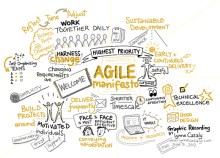
So what does all of this have to do with human resources?
For one thing the four values of agile development can be easily applied to the practice of HR. Incorporating adaptability, transparency, simplicity and unity can help improve HR service delivery.
Adaptability is important in the face of changing business needs, while simplicity is important when designing HR programs and practices that don’t cause confusion, alienate managers and employees or try to accomplish too much. Unity applies with respect to HR working together and ensuring it isn’t working in silos or at cross purposes with the business. Transparency is important in gaining the trust of managers and employees and explaining why things have to be done in a certain manner.
I have a good example to share about what we are currently doing at Booking: HR and Business working together to create the best possible Employee Journey experience in IT. This means challenge the current status of our HR core policies, be open to feedback and change, truly listen and understanding the business needs and work together to make sure the communication and implementation phase will be successful. To achieve that we really need to team up with the Business and make sure everyone understands the push and the limit of each proposal and new change.
An agile model of this specific example is the willingness to incorporate feedback into the new project so that changes can be made incrementally and early in the process. From an HR perspective, it’s important to work closely with other stakeholders and obtain their input very early on. For ex. as part of the Employee Journey, we are now changing the set up of the new HRS toll only implemented at the beginning of last year. Why? This was done by thinking Global, in big steps and without thoroughly consulting the immediate stakeholders. This handed up in lots of frustration from the management side with a feeling that HR was pushing process to them or that the processes were too long, with too many approval steps for example. Although the intention of the HR department was clearly positive (empower managers, give them the right tool to find all the info needed about their teams, create reports from whenever and wherever, initiate processes that wouldn’t need email-chains approval etc.) something clearly went wrong. But What/Why?
“Giving and receiving feedback is at the heart of any successful agile implementation”
Looking back, this was an clear project where an effective Retrospective would have made a huge difference.
 agile hrbp