Hello Agile people!
Today I’d like to share with you an article written by Tom O’Shea in his blog Agility- consultancy and training where he explains a new model of Agility by describing five characteristics needed for organizations to be capable of anticipating and responding to changing demands and adapting to new requirements. Furthermore we will see how this model could be nicely adapt and adopt by an HR Department.
Five Drivers of the Agile Model
Agility in individual leaders, teams or organizations is driven by five critical capabilities: Anticipating Change, Generating Confidence, Initiating Action, Liberating Thinking, and Evaluating Results. Each of these drivers must exist within three enterprise domains (people, processes, and technology) in order to create and sustain an agile enterprise.
Anticipate Change: Interpret the potential impact of business turbulence and trends along with the implications to the enterprise.
- Requires effective processes for: Visioning, Sensing and Monitoring
Generate Confidence: Create a culture of confidence and engagement with all stakeholders especially associates in effective and collaborative teams.
- Requires effective processes for: Connecting, Aligning and Engaging
Initiate Action: Provide the fuel and the systems to enable things to happen proactively and responsively, at all levels of the organization.
- Requires effective processes for: Bias for Action, Decision-Making Capability, Collaborating
Liberate Thinking: Create the climate and conditions for fresh innovative solutions by empowering, encouraging, teaching and expecting others to be innovative.
- Requires effective processes for: Bias for Innovation, Focusing on Customers and Idea Diversity
Evaluate Results: Maintaining a strong focus and feedback system to continuously learn and improve from actions and changing dynamics.
- Requires processes for: Creating Expectations, Real Time Feedback, Fact Based Measures
Key question for the day based on the above model:
How can senior HR leaders inspire their teams to see their roles as Agility Champions and begin building their own strategic roadmap for creating the AGILE HR function? Naturally, it all begins with engaging our teams to discover some CLARITY on core fundamentals: START WITH WHY.
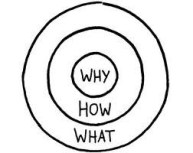
Just as with inspiring leaders, inspiring teams benefit from the occasional re-grounding around the three simple questions: “Why are we here, How will we be successful and What does that success look like to our stakeholders”? This can be very powerful when done in a climate of real hopefulness and possibility where the conversation is actually connected to the company success model.
Teams of all kinds get inspired and energized when they see and feel alignment to a success model and leadership climate building learned hopefulness and not the kind of learned helplessness profiled for HR years ago – but still prevalent in too many corporate environments. We see this learned helplessness also infecting many HR teams where the corporate rhetoric of people-centric culture does not match up with every day corporate practices. Goes almost without saying that this climate is incongruent with creating real Agility Champions.
Just imagine the HR team as fully engaged Agility Champions – focused, fast and flexible. That vision can and, frankly, needs to be a new reality if the HR function and team are to be full business partners contributing to the transformation needed in organizations facing the VUCA (volatile, uncertain, complex and ambiguous) world.
Let’s outline some of the capabilities that operate in AGILE HR TEAMS using the Agile Model framework:
| Anticipate Change | · They have established good HR team clarity in VISIONING the why, how and what success looks like for the team at all levels throughout the HR organization.
· They have identified the internal and external HR stakeholder community and mapped the forces of change that helps them become proactive in SENSING change early. · They systematically MONITOR key internal and external factors to recognize patterns and trends on critical factors potentially impacting organization and HR team success. |
| Generate Confidence | · They continuously reinforce line of sight within HR team and stakeholders to energize and CONNECT all team members into a positive community of practice and expertise.
· They insure close ALIGNMENT with vision, values, priorities, behaviors and resources actively percolating across the team to build highly credible HR team brand value. · They expect, create, support and value highly ENGAGED levels of individual and team ownership and involvement with all levels throughout the HR team |
| Initiate Action | · They expect and promote a positive BIAS FOR ACTION and sense of urgency for doing right things throughout the HR team as well as catalysts for positive change beyond.
· They have built HR team skill, accountability and trust through better and faster DECISION-MAKING encouraged and expected at all levels within the team. · They are champions of COLLABORATION and skillful in building cooperation and commitment in everything they do within the team as well as with stakeholders. |
| Liberate Thinking | · They have built a climate with a BIAS FOR INNOVATION valuing and always promoting fresh innovative solutions to match the growing complexity in business issues.
· They are driven by a CUSTOMER FOCUS orientation that recognizes superior customer experience naturally starts internally and must be modeled at all HR touch points. · They actively understand the power of IDEA DIVERSITY and find ways to reach out and incorporate involvement and ideas from stakeholders at all levels. |
| Evaluate Results | · They have CREATED EXPECTATIONS aligned with the enterprise success model, tied them to satisfying stakeholder requirements and with goals linked across the HR team.
· They have an active and progressive conversation flow providing REAL TIME FEEDBACK on things that matter with all stakeholders and HR team members. · They have established and pay attention to FACT BASED MEASURES in their HR Team Success Dashboard which helps them triage team vital signs, monitor key agility indicators in order to recognize improvement priorities and critical success factors |
 agile hrbp